


🎩 The Jay Cooke Playbook (Stratechery)
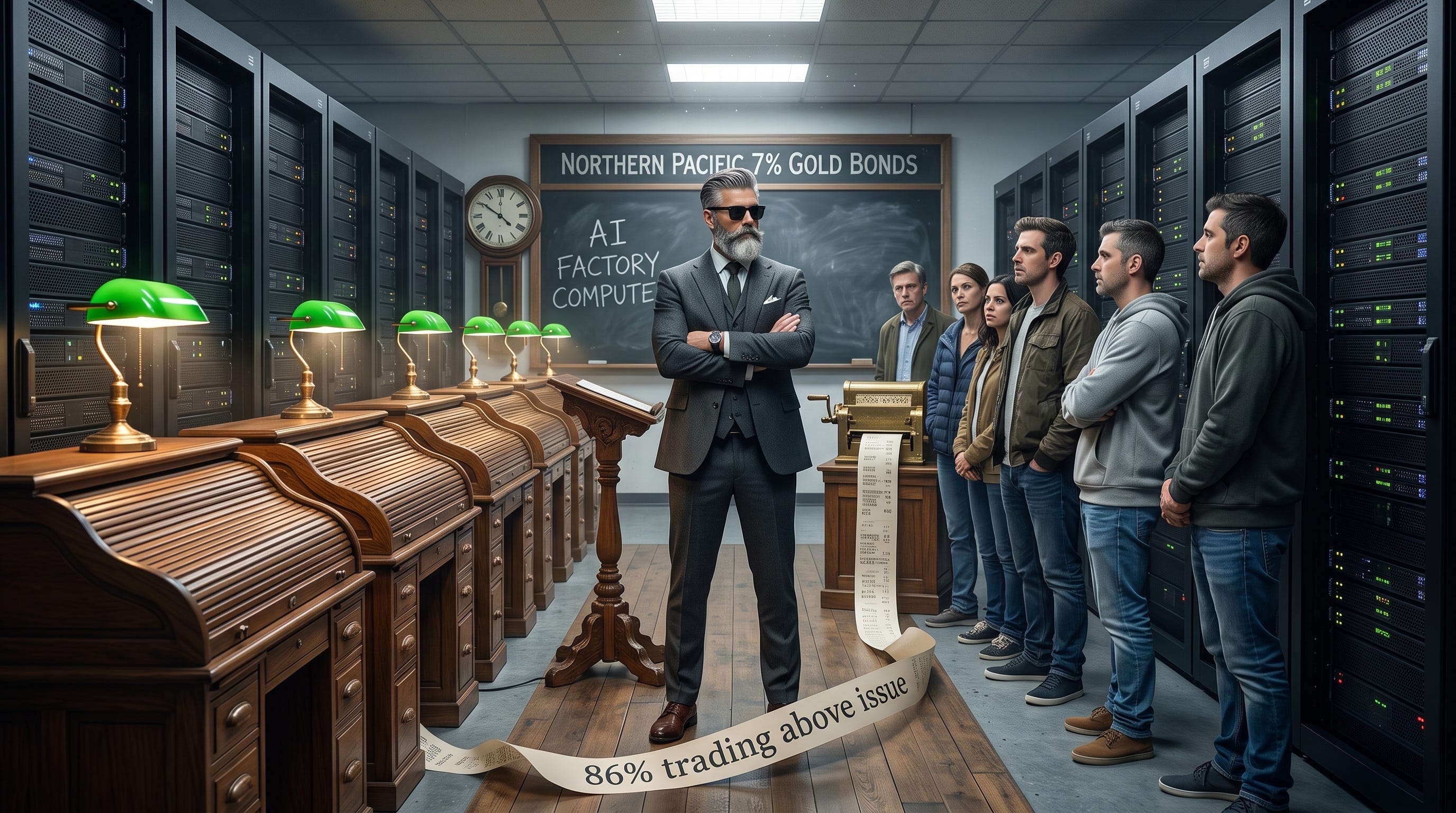
CEOs are reading Liaquat Ahamed’s 1873 this summer. It tells the story of how Jay Cooke’s limitless need for capital to fund railways ended up triggering a wave of railroad bankruptcies, a subsequent depression and deflation wave arguably leading into World War I. Dynamics today are not dissimilar. AI compute is inventing itself as a new investable asset class backed by itself. Kind of like railway bonds.
🐻 Is the Bull Coming to Market? (Maxx Waring)
Is the bull market we have known and loved for the better part of the last two decades coming to an end? If you look at it one way, equities are expensive even if the immediate crash is too hard to call.
🪟 Could Microsoft Win AI? (Jing Hu)
Microsoft is looking like an AI winner again. Being embedded in Office and now being provider agnostic is a structural advantage. They can pay for Azure expansion without going into negative cash flow as customers just flow through existing relationships. They might be the best positioned of the hyperscalers for this buildout, especially if the buildout collapses.
🏃 Google Runs a Different Race (Tim O'Reilly)
Google shook up their AI operation. Many are reading that Google gave up on AI — giving up on being a frontier lab in most respects and focusing on delivering Google Cloud Platform. Picking immediate profits over longtime leadership. Another way to look at it is that Google is choosing to focus on diffusion and the edge. They are looking at owning the grid, not just the power plant.
💵 The Token Brokers (Matt Lenhard)
Matt heard rumors that people were offering Anthropic AI credits at steep discounts of market rate. He decided to learn more and found an underground ecosystem.
💰 Ownership Pays More Than Effort (kyla scanlon)
Since 1990, stocks are up 1,500%. Paychecks have only grown 18%. It is not shocking that Gen Z has become enamored with stock trading, sports betting and other aspects of the passive income grift economy. Rational actors are figuring out you get rewarded a lot more for ownership than for effort and behaving accordingly.
👷 What Is Really Happening to Jobs? (Stanford SIEPR)
AI is either credited with powering economic booms or destroying the labor market depending on the headline. The truth is a lot more nuanced. It does not look like AI is having a direct effect on unemployment over all. There could be something in entry level hiring, or that could be a response to fed rates. Software developers are actually in more demand than they were previously. If the computers are taking jobs it isn’t happening yet.
🥲 Making Intelligence Unnecessary (Liberty 💚 🥃)
Compiling a computer program is an act that compresses and codifies the instructions so they are fast and efficient for the machine to run. You cease paying the tax of figuring out how the work is done, you just get to enjoy the outputs. The same can be said for AI — it creates compiled intelligence, letting you reap compounding rewards.
🪖 Do Main Battle Tanks Have a Future? (Stephen Bryen)
Heavy, complicated, powerful and expensive western main battle tanks have not acquitted themselves well in Ukraine. NATO’s technology advantage proved no match for FPV drones, modern anti-tank weapons as well as old enemies like landmines and mud. Making them lighter might help, as can active protection systems. But losing armor and scaring away your infantry support are counterproductive to the battlefield role.
📝 The Only AI Writing Policy You Need (Sophie Alpert)
Sophie Alpert wrote this brief, pointed and brilliant AI writing policy for her team at Clay. She nails the important point — stand behind your work and don’t waste people’s time. These were good ideas before AI could write for you, but they are much more important when writing effectively becomes free.
🤴 The Abundance Around Us (Jordan Dworkin)
We live lives our ancestors dreamed of.
The Look
According to Rohin Dhar, Housing prices have grown, but equities have grown more. A median priced single family home in San Francisco has declined 80% in QQQ terms over the last decade.

Did you enjoy reading this post? Hit the ♥ button above or below because it helps more people discover great Substacks like this one and it helps train your algorithm to get you more posts you like. Please share here or in your networks to help us grow!